
The Brief — On Believing It's Possible.
On saying yes, saying no, and the damn in-between

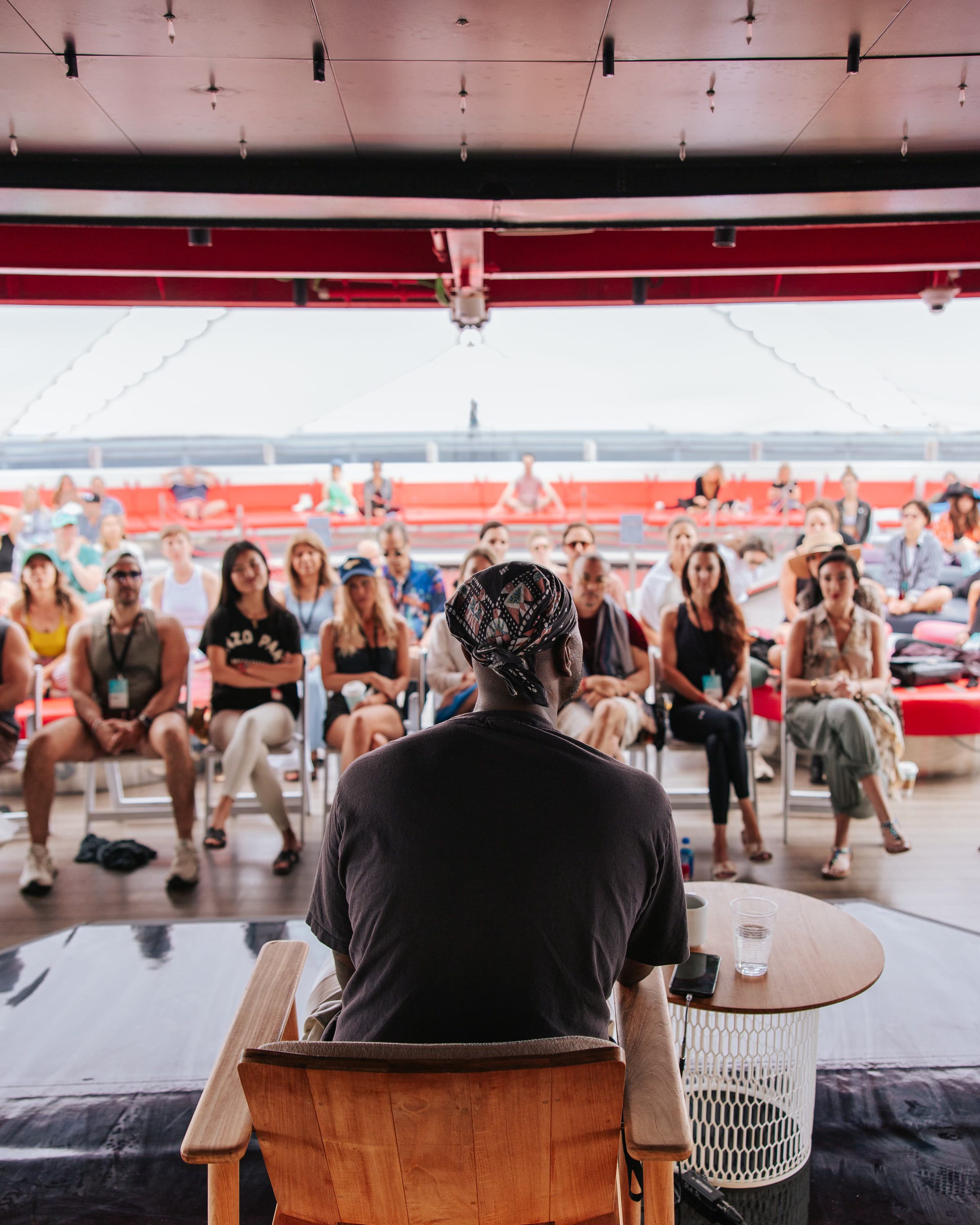
I’m back. Barely.
I am writing this from New York, which feels, after the last 10 days, like an act of mercy.
No disrespect to anyone that lives in Miami. But it does not feel like a real place and I, for whatever reason, never quite seem to enjoy myself there. It could have something to do with ebing sick for a whole week. The heat doesn’t care about your fever. The palm trees have no sympathy. I was horizontal in a hotel room watching the ceiling, replaying all of my life decisions that had gotten me to this point.
Anyway, It’s good to be back in the beauty and bravery that is Brooklyn. I missed my bed, my wife, the particular chaos of this city. There’s something about New York that confronts you, whether you’re ready or not. Thankfully the gift Miami did give me was the gift of slowing down and looking back. Something i haven’t done in 5 months.
Something to Learn
That you don’t have to say yes to everything.
I hate having to relearn lessons from childhood. But here we are. There’s a term for this in psychology; somewhere between people-pleasing, FOMO, and what some researchers are calling opportunity anxiety, the low-grade sense that every open door must be walked through or it will close forever. That every opportunity needs to be taken. That the next yes is the one that finally changes everything.
For those of us who grew up in immigrant households or in environments where enough was never a complete sentence, this pattern runs particularly deep. It isn’t ambition exactly. It’s closer to vigilance. A type of hypervigilance that once kept us safe and now just keeps us scheduled.
It’s also akin to the Pali word: tanha. Often translated as craving, though the Pali holds more than that. It’s the thirst that believes the next thing will finally satisfy. And it shows up in the most random moments. The next opportunity. The next city. The next version of your life. The science tracks alongside it: our threat-detection systems can’t easily distinguish between actual loss and the mere anticipation of it. So we say yes to avoid the feeling of missing out, which is really just another way of saying we say yes to avoid sitting with discomfort.
This next chapter is teaching me again and again things I need to learn. It’s OK to say no and to learn to sit with the discomfort long enough to hear what it’s actually telling me.
Perhaps you too are going through your own version of this. As a fellow suffering being I’m here to remind you that you don’t have to say yes to everything.
Something to Practice
Imagination.
I know. Bear with me.
There is a network in the brain that activates precisely when we are not focused on a task. When we’re daydreaming, remembering, drifting forward into a future we haven’t planned yet. For a long time neuroscientists considered it background noise. Now they understand it as something important: to creativity, to meaning-making, to the slow construction of the ‘self’.
This is not a small faculty we’re talking about, turns out it’s quite crucial.
Yvon Chouinard, founder of Patagonia, wrote in Let My People Go Surfing about building a company around a different set of values entirely. Not growth for its own sake. Not the next raise or the next exit. But quality, slowness, integrity, a business that could hold a life inside it. The book is essentially an argument that imagining differently is not naïve. It’s the only serious response to a world that has stopped questioning its own assumptions.
I’ve been thinking about this obsessively as I build gentle—noise, which is the third significant thing I’ve built in this ‘industry’ and feels, in almost every way, unlike the first two. With my first company, A—SPACE, we were young and running on hunger. Idealistic in the way that only works before you understand the literal cost of things. With my second, I moved almost overnight into a venture-backed world, and the velocity of that had its own kind of aggression. Real things were built. Real things were also lost.
This time I’m less interested in building the next big thing. I’m more interested in imagining a different way of doing this entirely. A conversation with my dear friend Anu Gupta the night before I spoke at Harvard made me think: there has to be another way of operating in this industry. One that doesn’t require disappearing inside it and losing yourself ethically. I haven’t fully mapped it yet. But I think it begins here, in the imagination, before it becomes anything else.
And I wonder if the same is true for you.
Not about business, necessarily. But about something in your life that has started to feel like a given. The relationship that’s gone a little quiet, accumulated the sediment of routine until you’ve forgotten what first moved you toward that person. The health you’ve been meaning to return to, the walking or running you’ve been postponing. The version of yourself you had a feeling about once, before the noise got loud.
We talk a lot in wellness culture about healing. About fixing and optimizing. But I think what we need first, before any of that, is the willingness to imagine. To believe, genuinely, that there is a way. That the shape of things is not fixed. That something new is still possible.
Especially now, when algorithms have become the primary architects of our attention, choosing to imagine something genuinely new is not escapism but closer to an act of refusal.
This week: ten minutes without your phone. Without a prompt, without an outcome. Let the mind move toward something it actually wants. Let it believe, for a moment, that a different arrangement is possible. Notice what arises. I think that space is where everything begins.
Something to Enjoy
The outside.
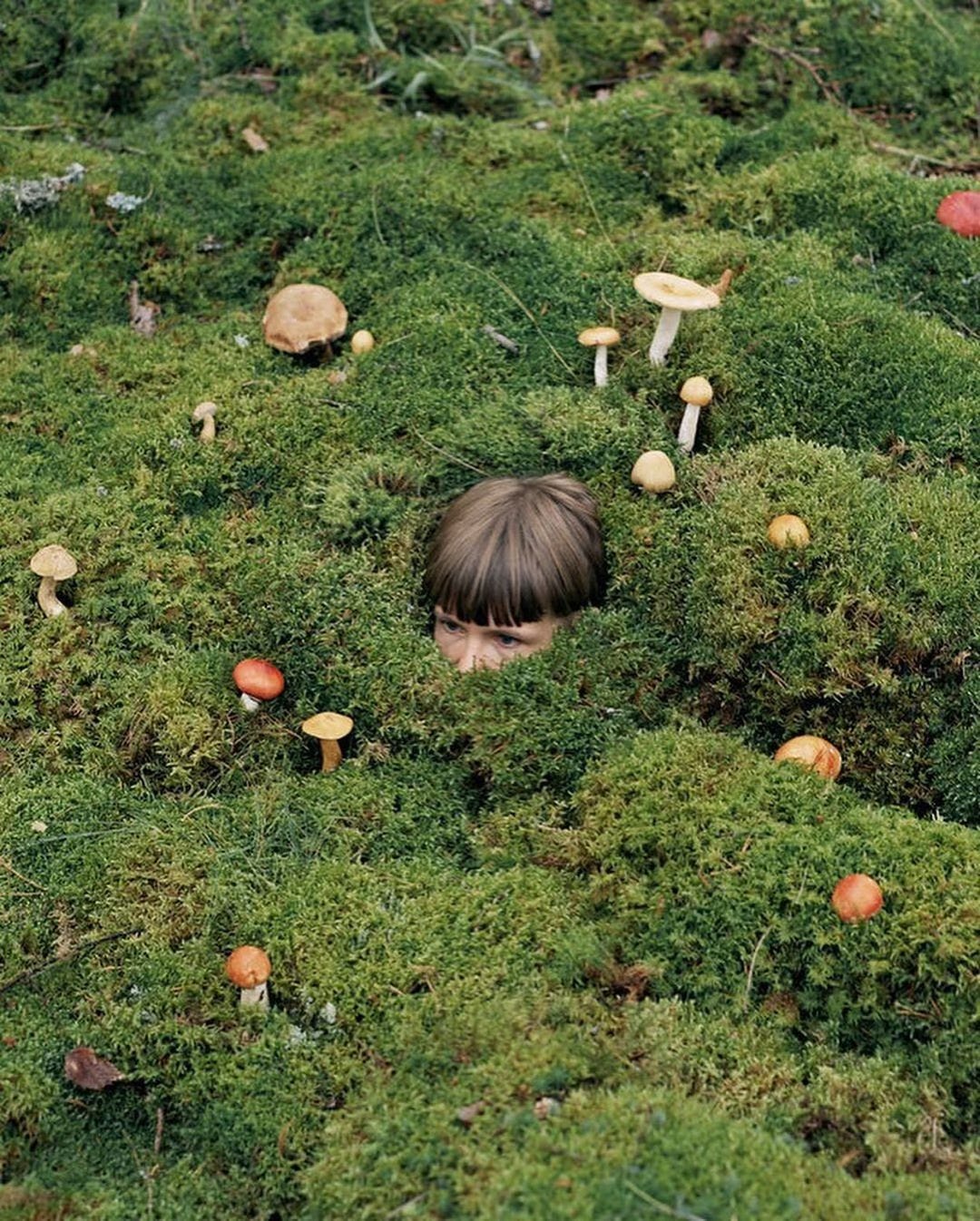
I’ve done a number of interviews recently, most of them around the same questions: AI, social media, mental health. May is Mental Health Awareness Month, and brands are scrambling, hosting panels, publishing tip sheets, booking keynotes. I understand the impulse, it happens every year in May.
Here’s one novel thing I’ve been telling them: let your people go outside. Literally. Away from their desks, away from their devices. Create something that doesn’t remind them, even softly, that there’s a full inbox waiting.
The data is there if you need it. Time in natural environments measurably reduces cortisol. It restores directed attention. It quiets the default anxieties of screen life. But more than the science, we feel it. We have always felt it. The body knows things the calendar doesn’t.
Social media use is declining across demographics. Gen Z is pushing what they’re calling the “touch grass” movement. We are exhausted in a way that productivity culture cannot fix, because productivity culture is part of what exhausted us.
So go outside. Not to optimize. Not to track a walk on your wearable. Just to be somewhere that was here long before any of this was.
One of the best parts of that imagining seems to be letting our incredible subconscious chime in on the topic
Touch grass. Put your face in the sun. Get away from devices & doing. I’m slowly returning to this. To play, to daydreaming, healing for healing not for hacking. Your words always land where they need to, Manoj. Keep imagining!